Featured
Table of Contents
- – The Anxiety Epidemic: When Traditional Therapi...
- – Understanding Stress And Anxiety With a Neurob...
- – Ketamine's Unique Device for Stress And Anxiet...
- – Scientific Applications Throughout Stress And ...
- – Generalized Anxiety Condition
- – Panic Attack and Agoraphobia
- – Social Stress And Anxiety Problem
- – Incorporating Evidence-Based Therapies with Ke...
- – EMDR for Anxiousness Roots
- – Accelerated Resolution Therapy for Anxiety Im...
- – Inner Family Solutions for Anxious Parts
- – Scientific Procedures: Structure and Delivery
- – Contrasting Ketamine Approaches to Requirement...
- – Neuroplasticity and Long-Term Anxiety Decrease
- – Safety Considerations and Managing Expectations
- – That Benefits A Lot Of from Ketamine Treatment...
- – The Future of Ketamine for Anxiousness Disorders
- – Integration: Sustaining Change Beyond the Medi...
- – Verdict: A New Standard for Anxiety Treatment
The Anxiety Epidemic: When Traditional Therapies Fail
Stress and anxiety conditions stand for the most common mental wellness problem in the United States, impacting roughly 40 million adults every year. From generalised anxiousness condition (GAD) to panic problem, social anxiety, and phobias, these problems produce prevalent patterns of concern, concern, and avoidance that significantly restrict lifestyle. While cognitive-behavioral treatment and medicines like SSRIs assist lots of patients, a substantial portion-- quotes recommend 30-40%-- don't attain adequate relief from first-line therapies.
Standard anxiousness therapy normally includes regular therapy sessions educating coping skills, cognitive restructuring, and steady direct exposure to feared situations. Medicines might lower signs and symptoms however usually call for months to get to full effectiveness and feature negative effects including psychological blunting, weight gain, and sex-related dysfunction. For those with treatment-resistant stress and anxiety, the cycle of attempting different medicines and treatments can extend throughout years, with installing frustration and reducing hope.
The persistent activation of the body's anxiety response takes an extensive toll. Anxiousness sufferers experience elevated cortisol, interrupted rest, digestive system problems, muscular tissue tension, and enhanced threat for cardio troubles. Beyond physical health and wellness, stress and anxiety tightens life itself-- declining social invitations, preventing occupation chances, limiting travel, and creating a narrowing spiral of fear-driven choices. The demand for a lot more efficient, faster-acting treatments has actually never ever been more immediate.
Understanding Stress And Anxiety With a Neurobiological Lens
Stress and anxiety conditions arise from dysregulation in numerous mind systems. The amygdala-- the mind's fear center-- ends up being hyperresponsive, setting off alarm system signals to dangers both actual and imagined. The prefrontal cortex, which usually regulates emotional responses and offers rational point of view, reveals minimized activity in stress and anxiety conditions. This develops a neurobiological imbalance where fear responses control and reasoning capacity lessens.
Neurotransmitter systems additionally play essential functions. GABA, the mind's key repressive natural chemical, is often deficient in anxiety disorders, reducing the brain's ability to "put the brakes on" distressed thoughts and physical arousal. Glutamate, the excitatory neurotransmitter, might be overactive, keeping neural circuits in a state of hypervigilance. Serotonin dysregulation affects state of mind and fret patterns, while norepinephrine drives the physical symptoms of anxiety consisting of racing heart, sweating, and trembling.
Possibly most significantly, anxiousness produces inflexible neural pathways-- habitual patterns of thought and action that end up being deeply ingrained through rep. The mind basically discovers to be distressed, producing "worry circuits" that turn on immediately in reaction to triggers. These established patterns withstand modification exactly due to the fact that they've come to be so reputable. Damaging cost-free requires not just brand-new coping techniques yet actual rewiring of semantic networks-- a process called neuroplasticity.
Ketamine's Unique Device for Stress And Anxiety Alleviation
Ketamine-Assisted Intensive Retreats supplies an essentially various technique to anxiety treatment. Unlike SSRIs that gradually boost serotonin over weeks, or benzodiazepines that provide momentary symptom suppression, ketamine appears to facilitate quick restructuring of the neural circuits underlying anxiousness.
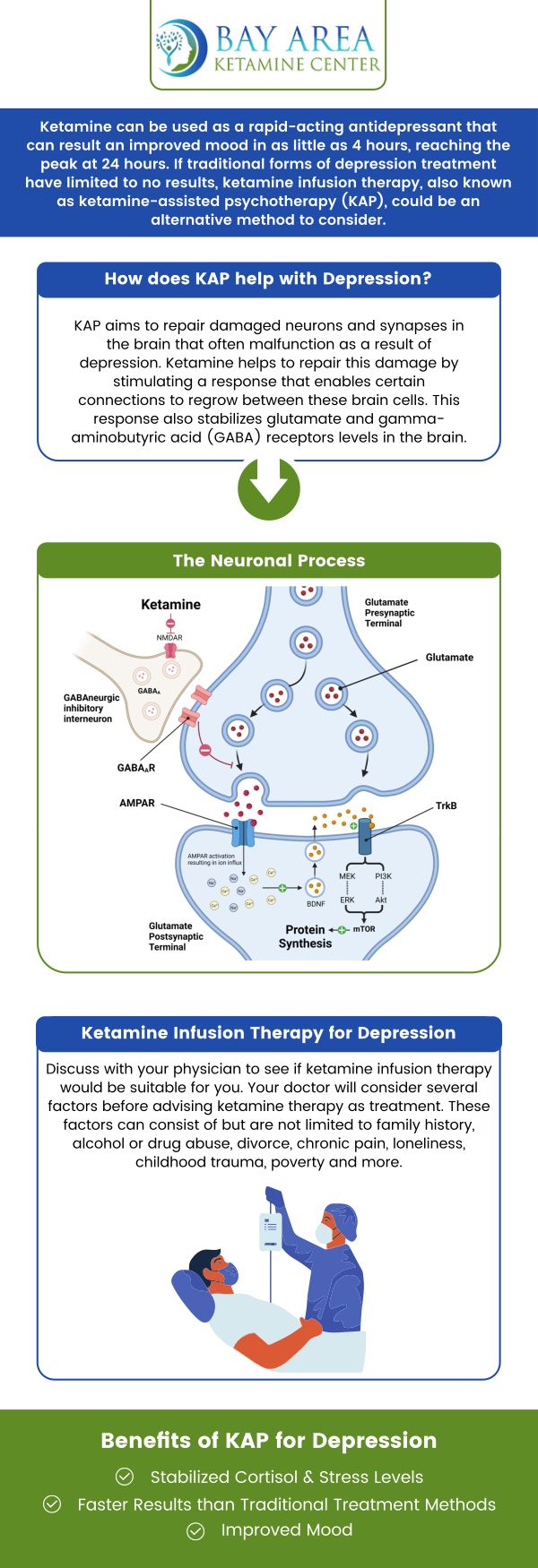
As an NMDA receptor villain, ketamine modulates glutamate task, temporarily interrupting the hyper neural patterns characteristic of anxiety problems. This produces a window of reduced stress and anxiety and raised cognitive flexibility-- a state where new patterns can be established. Research reveals that ketamine activates quick synthesis of brain-derived neurotrophic factor (BDNF) and promotes synaptogenesis, the formation of new neural connections, particularly in the prefrontal cortex and hippocampus.
The therapeutic results often begin within hours as opposed to weeks. Patients explain a sense of mental "spaciousness"-- minimized rumination, quieter psychological chatter, and decreased physical stress. This isn't just sign reductions but appears to stand for actual modifications in mind connectivity. Neuroimaging research studies have revealed that ketamine normalizes hyperconnectivity in anxiety-related mind networks while improving connection in regions connected with psychological law.
The dissociative homes of ketamine likewise offer restorative objectives for anxiety. By developing emotional distance from nervous ideas and feelings, ketamine allows people to observe their anxiousness patterns without being bewildered by them. This meta-cognitive understanding-- seeing stress and anxiety as a sensation instead than being consumed by it-- stands for a vital change that can continue past the medication session itself.
Scientific Applications Throughout Stress And Anxiety Conditions
Ketamine-assisted psychiatric therapy reveals promise throughout the range of anxiety problems, though study and scientific procedures vary by particular disorder.
Generalized Anxiety Condition
GAD includes relentless, excessive bother with numerous life domains-- health and wellness, funds, relationships, work-- frequently gone along with by physical signs like muscle mass stress, tiredness, and problem focusing. Typical CBT for GAD concentrates on determining and challenging worry patterns, but progress can be frustratingly slow for those whose concern has become deeply regular.
Ketamine treatment for GAD shows up to disrupt the rumination loopholes that identify the disorder. Clients report that the consistent psychological discourse and disastrous thinking that usually dominates their understanding lessens significantly, in some cases within hours of treatment. This reduction in mental sound produces area for brand-new cognitive patterns to establish. When incorporated with treatment throughout integration sessions, clients can more effectively learn and exercise healthier thought patterns without the frustrating interference of persistent concern.
Panic Attack and Agoraphobia
Panic problem entails frequent, unforeseen panic attacks-- extreme episodes of anxiety gone along with by signs and symptoms like competing heart, lack of breath, upper body pain, dizziness, and worry of passing away. The anxiety of having another anxiety attack typically results in agoraphobia, where individuals stay clear of situations or places where escape could be tough.
Ketamine's fast anxiolytic effects may help damage the fear-of-fear cycle that maintains panic problem. The medication experience itself can demonstrate to clients that extreme physical experiences don't necessarily cause catastrophe-- a type of experiential knowing that enhances traditional direct exposure treatment. Some programs use ketamine sessions as preparation for direct exposure job, minimizing awaiting stress and anxiety sufficient for people to involve with feared scenarios they've avoided for years.
Social Stress And Anxiety Problem
Social anxiousness involves extreme worry of social situations, specifically those including possible judgment or examination. The problem can be devastatingly separating, leading to avoidance of work, college, partnerships, and everyday activities involving social communication.

The neuroplastic results of ketamine might help patients restructure deeply deep-rooted ideas about social scenarios and their very own social skills. Throughout integration sessions adhering to ketamine management, specialists can aid patients check out and change the adverse self-perceptions and tragic predictions that sustain social anxiousness. The momentary decrease in self-consciousness that ketamine offers can use a peek of what social convenience may really feel like, serving as a therapeutic target for ongoing work.
Incorporating Evidence-Based Therapies with Ketamine
The most advanced ketamine programs for anxiety do not count on medicine alone yet incorporate numerous restorative methods to create thorough, long-term modification.
EMDR for Anxiousness Roots
While EMDR Therapy Intensives is best understood for trauma therapy, it's increasingly acknowledged as efficient for anxiousness problems, particularly when anxiousness has clear roots in previous negative experiences. Numerous anxiousness conditions establish following certain events-- anxiety attack complying with a clinical emergency, social anxiousness after humiliating experiences, or generalized anxiety coming from youth instability.
EMDR aids people recycle the memories underlying their stress and anxiety, lowering their emotional cost and changing their definition. When integrated with ketamine's neuroplastic effects, EMDR can deal with exceptional speed. People might recycle in a single session memories that have fueled years of anxiousness. The reciprocal stimulation used in EMDR shows up to work synergistically with ketamine's effects on memory reconsolidation, permitting deeper and more quick processing.
Accelerated Resolution Therapy for Anxiety Images
Accelerated Resolution Treatment (ART) uses powerful tools for resolving the aesthetic elements of anxiousness. Lots of stress and anxiety victims experience invasive psychological images-- visualizing catastrophic situations, picturing been afraid end results, or repeatedly "seeing" past embarrassing minutes. These pictures fuel anxiousness and keep nerves arousal raised.
ART helps patients transform these stressful pictures into more neutral or positive options through a procedure of volunteer picture replacement. When made use of together with ketamine therapy, ART can quickly deal with certain anxiety-provoking imagery that surfaces during medicine sessions. The combination permits both expedition of stress and anxiety patterns throughout ketamine experiences and targeted resolution of particular fear content during ART job.
Inner Family Solutions for Anxious Parts
Internal Family Solutions Treatment (IFS) provides a framework for recognizing anxiousness as developing from protective "parts" of the mind. From an IFS perspective, distressed parts developed as approaches to avoid damage-- the part that frequently scans for threat, the part that stays clear of social situations to avoid being rejected, the part that frets obsessively to keep control.
Ketamine appears to promote access to Self-energy-- the tranquility, caring core from which patients can associate to their distressed get rid of interest as opposed to judgment. Many clients report that throughout ketamine sessions, they lastly understand why their stress and anxiety exists and can establish concern for the parts attempting to protect them. This change from combating anxiousness to comprehending it stands for a critical therapeutic juncture. Integration job making use of IFS aids people keep this thoughtful connection with their nervous components, working out brand-new, less limiting means of remaining risk-free.
Scientific Procedures: Structure and Delivery
Ketamine-assisted psychiatric therapy for stress and anxiety generally starts with detailed analysis consisting of anxiousness signs and symptom intensity, details triggers, past treatment history, and clinical screening. Medical professionals review the nature of the stress and anxiety-- is it mainly cognitive (worry and rumination), somatic (physical signs and symptoms), or behavior (evasion patterns)? This assessment overviews the integration of specific healing methods.
The ketamine administration stage most typically makes use of sublingual lozenges, intramuscular shot, or intravenous mixture. Application for anxiety may differ somewhat from protocols used for clinical depression or PTSD, with some clinicians preferring reduced doses that lower anxiety without producing profound dissociation. The optimal dosage creates a state of loosened up understanding where nervous ideas decrease but healing interaction remains feasible.
Therapy regularity differs by program and individual reaction. Some extensive retreats supply ketamine sessions 3 to 5 times per week over one to 2 weeks, profiting from the neuroplastic home window and preserving restorative energy. Other programs make use of regular or twice monthly sessions over numerous months, enabling gradual assimilation and skill-building in between medication experiences.
Integration sessions complying with each ketamine management are crucial for converting short-lived relief into long-term modification. These sessions might incorporate cognitive work analyzing and restructuring anxiety-provoking ideas, somatic techniques to control nervous system activation, and specific techniques like EMDR, ART, or IFS to resolve root causes and preserve gains.
Contrasting Ketamine Approaches to Requirement Anxiousness Therapy
Traditional anxiety treatment fixate cognitive-behavioral therapy (CBT), which teaches people to recognize nervous ideas, review their accuracy, and create even more well balanced reasoning. Exposure treatment systematically faces been afraid circumstances to lower evasion and prove that been afraid outcomes hardly ever take place. These methods have strong proof bases and help many people, but they require consistent method over months and can be challenging for those with severe signs and symptoms.
Medication options consist of SSRIs and SNRIs, which call for 4-8 weeks to reach effectiveness and often give only partial symptom relief. Benzodiazepines provide fast relief yet lug risks of dependence and cognitive impairment. Beta-blockers can reduce physical signs yet do not deal with underlying anxiousness. None of these drugs directly promote the neuroplasticity required for long-term modification.

Ketamine-assisted extensive therapy provides several potential benefits. The quick beginning-- typically within hours to days-- provides hope and motivation for continued therapy. The neuroplastic results develop optimum conditions for discovering new patterns instead than just taking care of signs. The extensive style allows for concentrated healing work without the disturbances and loss of momentum that pester weekly outpatient therapy.
The combination with complementary techniques addresses anxiousness from numerous angles all at once. Ketamine provides neurobiological shifts and momentary sign alleviation, EMDR reprocesses underlying memories, ART transforms traumatic imagery, and IFS aids clients understand and collaborate with their protective parts. This multi-layered technique acknowledges that anxiety is intricate and rarely responds optimally to single-modality treatment.
Neuroplasticity and Long-Term Anxiety Decrease
The secret to ketamine's efficiency for anxiousness likely hinge on its neuroplastic effects-- the promotion of new neural connections that enable various patterns of believing and reacting. Standard stress and anxiety therapies work primarily via repeating and technique: repeatedly difficult distressed thoughts, repeatedly facing feared circumstances up until habituation happens. This procedure functions but can be slow-moving because it's antagonizing reputable neural paths.
Ketamine appears to make the brain temporarily extra flexible, extra responsive to establishing new patterns. It's as if ketamine loosens up the dirt, making it less complicated to grow brand-new seeds. The therapeutic job done throughout and quickly after ketamine sessions-- the cognitive restructuring, the memory reprocessing, the thoughtful components function-- gets encoded more deeply and promptly than it might or else.
Research sustains this mechanism. Studies show that ketamine's effects on synaptic plasticity linger beyond the intense medication effects, producing a home window of enhanced knowing capacity that can last days to weeks. This clarifies why combination job throughout this period is so vital-- it's the moment when new patterns have the most effective chance of settling and replacing old stress and anxiety circuits.
For individuals, this converts to experiencing changes that really feel qualitatively different from previous treatments. Instead of effortfully handling stress and anxiety with coping abilities, many record that the anxiety merely comes to be much less existing, less compelling. The mental patterns that produced constant worry feel less automatic. Physical tension relaxes. The world feels more secure. These aren't just signs and symptom enhancements yet mirror real modifications in how the mind refines risk and safety.
Safety Considerations and Managing Expectations
Ketamine's safety profile for stress and anxiety treatment shows up favorable, with most negative effects being light and temporary. The dissociative experience itself can initially boost anxiousness in some individuals, though this commonly reduces with duplicated sessions and appropriate preparation. Some individuals experience short-term boosts in heart price and blood pressure, requiring surveillance but seldom causing serious issues.
The dissociative effects need mindful monitoring, particularly for anxiousness individuals that may be afraid blowing up. Detailed prep work-- explaining what to expect, highlighting that the therapist remains present, framing dissociation as short-lived and risk-free-- assists individuals come close to the experience with much less apprehension. For those with extreme anxiety about the ketamine experience itself, beginning with reduced doses can build self-confidence and familiarity.
One vital consideration is distinguishing in between ideal stress and anxiety reduction and possibly problematic reductions of flexible fear. Some anxiousness is healthy and balanced and safety-- it signals authentic threat and encourages required action. Effective therapy lowers excessive, disproportionate anxiety while maintaining ideal caution. Therapists collaborate with individuals to determine which stress and anxiety offers them and which needlessly restricts their lives.
Clients ought to recognize that ketamine is a tool, not a cure. While some people experience lasting remission after a brief treatment program, others need continuous upkeep sessions. The resilience of renovation appears pertaining to integration quality, continued method of new patterns, and life circumstances. Those that view ketamine as the beginning of change as opposed to a single repair often tend to keep gains more effectively.
That Benefits A Lot Of from Ketamine Treatment for Anxiousness?
Ketamine-assisted extensive retreats may be specifically suitable for individuals with treatment-resistant anxiety-- those who have actually tried numerous SSRIs, completed courses of CBT, and still experience significant problems. The rapid results can offer crucial relief for those in dilemma, potentially preventing hospitalization or more invasive treatments.
Patients with anxiousness rooted in specific previous experiences might profit especially from incorporating ketamine with EMDR or ART, as these modalities can deal with the underlying memories fueling existing signs and symptoms. Those whose anxiousness includes inflexible thought patterns might respond well to ketamine plus cognitive treatment during the neuroplastic home window. People with strong somatic components-- physical signs dominating their anxiousness experience-- may benefit from ketamine combined with body-based integration work.
Ketamine isn't proper for everyone. Those with active material usage problems, certain cardiovascular conditions, or psychotic problems might not be candidates. People unpleasant with modified states of awareness or lacking ample assistance systems need to very carefully take into consideration whether this approach fits their needs and sources.
The choice to go after ketamine therapy must involve sensible assessment of what it can and can not provide. Ketamine can assist in quick shifts in mind function and create ideal problems for modification, but it doesn't remove the requirement for ongoing method, ability development, and interest to lifestyle aspects that affect anxiousness. It's an effective stimulant for modification, not an alternative to the work of developing a much less anxious life.
The Future of Ketamine for Anxiousness Disorders
Study right into ketamine for stress and anxiety conditions is expanding quickly, with several professional tests underway analyzing efficiency, ideal protocols, and systems of activity. Early outcomes are encouraging, though the proof base stays smaller than for ketamine's usage in anxiety and PTSD. As information gathers, protocols will end up being a lot more polished and standard.
Specific interest concentrates on recognizing which anxiousness patients profit most from ketamine. Exist biomarkers that forecast response? Do details anxiety subtypes react much better? What mix of modalities maximizes end results? These questions will be answered via proceeded medical study and mindful tracking of treatment results.
Educating programs are emerging to teach clinicians how to safely and efficiently integrate ketamine right into stress and anxiety therapy. Expert organizations are establishing practice standards. The trajectory suggests that within 5 to 10 years, ketamine-assisted treatment might become a mainstream choice for treatment-resistant stress and anxiety, a lot as it's ending up being for anxiety.
Insurance insurance coverage stays a considerable obstacle, with a lot of strategies not covering ketamine for stress and anxiety despite its expanding evidence base. As study demonstrates effectiveness and cost-effectiveness-- possibly decreasing long-term medicine prices and enhancing useful end results-- protection might increase, making therapy accessible to more individuals.
Integration: Sustaining Change Beyond the Medicine
Truth procedure of ketamine treatment success exists not in temporary sign relief during medicine sessions but in continual improvement in daily life. Combination job transforms the insights and changes experienced throughout ketamine right into long-term modification in ideas, habits, and nervous system regulation.
Effective combination for anxiety entails multiple parts. Cognitive work assists clients settle new viewpoints on their concerns and feared circumstances. Somatic techniques like modern muscle leisure, breathwork, or yoga exercise assistance retrain the nerves toward states of tranquil instead of continuous activation. Behavior experiments-- slowly involving with formerly stayed clear of scenarios-- aid clients find that feared end results rarely occur and construct self-confidence in their growing capability to handle discomfort.
Using corresponding therapies during assimilation depends upon specific demands. Some individuals benefit most from EMDR sessions reprocessing certain memories that fuel anxiety. Others require ART to attend to intrusive images and catastrophic psychological images. Still others find IFS most valuable for recognizing and functioning with protective distressed parts. Skilled medical professionals examine each client's presentation and incorporate methods as necessary.
Perhaps most notably, assimilation addresses the identity shifts that take place as anxiousness reductions. Lots of individuals have organized their whole lives around their anxiousness-- their routines, connections, career selections, and self-concept. As anxiety reduces, concerns develop: That am I without my stress and anxiety? What do I want from life when worry isn't making my choices? These existential concerns need thoughtful expedition and assistance as people tip into expanded opportunities for their lives.
Verdict: A New Standard for Anxiety Treatment
Stress and anxiety problems have actually long been considered as chronic conditions requiring lifelong monitoring. While some people will constantly require recurring support, ketamine-assisted intensive retreats provide the possibility of even more full resolution-- not just symptom monitoring yet actual rewiring of the neural circuits underlying excessive fear and concern.
By combining ketamine's neuroplastic results with evidence-based treatments like EMDR, ART, and IFS, this method addresses anxiety thoroughly. The quick relief gives hope and motivation. The enhanced neuroplasticity develops ideal problems for learning new patterns. The intensive layout permits focused restorative work that can achieve in weeks what could take years in standard setups.
For the millions dealing with anxiety problems-- those that've tried multiple treatments without appropriate relief, those whose lives have actually tightened under the weight of anxiety, those that have actually begun to lose hope that points can transform-- ketamine-assisted psychiatric therapy represents an appealing path onward. Not a magic solution, but a powerful tool that, when integrated with knowledgeable therapy and fully commited combination job, can aid individuals redeem their lives from the grip of chronic stress and anxiety.
The future of anxiousness treatment is advancing, and ketamine-assisted intensive approaches stand at the forefront of that development. As research proceeds, protocols boost, and access expands, even more individuals may discover the relief they've been looking for-- the opportunity of coping with ease as opposed to continuous concern, of making options based on wish rather than concern, of finally feeling at home in their own nerves.

Table of Contents
- – The Anxiety Epidemic: When Traditional Therapi...
- – Understanding Stress And Anxiety With a Neurob...
- – Ketamine's Unique Device for Stress And Anxiet...
- – Scientific Applications Throughout Stress And ...
- – Generalized Anxiety Condition
- – Panic Attack and Agoraphobia
- – Social Stress And Anxiety Problem
- – Incorporating Evidence-Based Therapies with Ke...
- – EMDR for Anxiousness Roots
- – Accelerated Resolution Therapy for Anxiety Im...
- – Inner Family Solutions for Anxious Parts
- – Scientific Procedures: Structure and Delivery
- – Contrasting Ketamine Approaches to Requirement...
- – Neuroplasticity and Long-Term Anxiety Decrease
- – Safety Considerations and Managing Expectations
- – That Benefits A Lot Of from Ketamine Treatment...
- – The Future of Ketamine for Anxiousness Disorders
- – Integration: Sustaining Change Beyond the Medi...
- – Verdict: A New Standard for Anxiety Treatment
Latest Posts
The Comprehensive Approach to Healing
How EMDR Addresses Inherited Trauma
When Your Body Carries What Your Mind Can't Understand
More
Latest Posts
The Comprehensive Approach to Healing
How EMDR Addresses Inherited Trauma
When Your Body Carries What Your Mind Can't Understand